







Jan 15, 2010
VOLUME 27 NO.01

THE MAGAZINE FOR MUSICAL INSTRUMENT AND SOUND PRODUCT MERCHANDISERS


VIDEO WEBCAST
-
First ever M.I. video webcast
-Join the Vnewsletter


VIDEO WEBCAST
NAMM 2010
Jan. 14-16, 2010 ConventionTV@NAMM
-

-Table of Contents
-Digital Issue Download

FEATURES
-Is a New Healthcare Plan Just Snake Oil? We take a thorough look at how a new public healthcare plan can affect you and your employees. ?
-Bonanza! Behringer Buys Bosch Brands Behringer’s parent company added the Midas and Klark Teknik brands to its stable.
-The Stars Will Come Out…This Weekend We highlight a few of the celebrity appearances at NAMM.
-What A Long Strange Trip It’s Been!!! We reminisce as we close out the first decade of the new millennium. It was a tough 10 years for many. How about for the music industry though? What’s ahead?
-
It’s Voting Time! Here are your nominees for the 24th annual Music & Sound Awards.
-Here We Come to Save the Day!!We provide a plethora of accessories that manufacturers assure you will provide excellent margins.
-For Those Who Make Lesser Publicized Instruments, We Salute You!!For the first time, we pay tribute to instruments and products that get little press coverage. We provide a well-deserved spotlight for these products!
-And the Bombs Keep Coming!Another big lawsuit is filed
against the industry.
This time, there are many
more defendants.
-Drumming to Their Own BeatHow well is the drum industry holding up during these difficult times? We call on three industry experts.
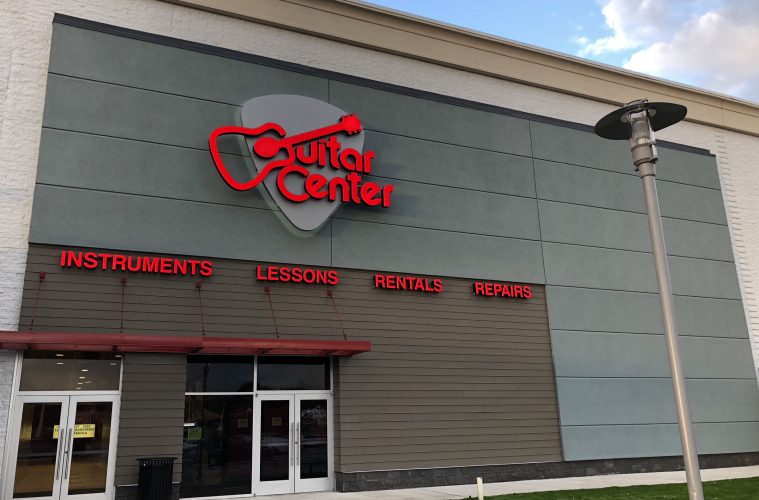
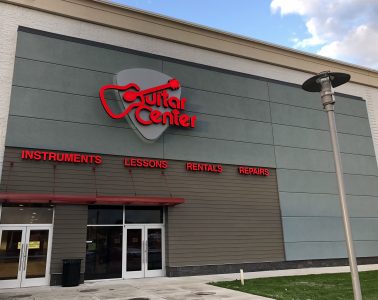
-Guitar Center, Fender, and NAMM Sued
-The Health of the Independent Dealer M&SR’s fourth annual independent retailer roundtable features a new twist. For the first time, manufacturers, hand-selected by the retailers, contribute to the story.
-Born In the USA! We feature manufacturers who produce a majority of their products in the United States. Why do they make products in the USA as opposed to Asian countries? Find out.
-…And the Show Did Go On! The economy took a big bite of Summer NAMM in Nashville, but there were still bright moments.


-The Latest, Industry, Dealers, People and Product Buzz and Showcases.

COLUMNS
-The Music & Sound Independent Retailer A food drive goes really well. iMSO reaches a huge milestone. And much more.
-Music & Sound Award Dealer Nominees: We present all dealer award nominees, including an addition this year: Best New Single-Store Dealer.
-MSR Anniversary: We look at the 10-year history of Daisy Rock. Why did Tish Ciravolo found the industry’s first “girl” guitar company?
-Sales Guru: Santa Claus IS coming to town. Find out why Gene Fresco is optimistic.
-NAMM Exhibitor Listings
-NAMM University Schedule
-Five Minutes With: For our NAMM issue, we thought we’d get two guests instead of one. Bruce Forbes and C.P. Pores of Equation Audio tell you basically everything about their company and the industry in general.
-MI Spy: Spy will be somewhere at NAMM this month. (You never know where he/she will be lurking). In the meantime, Spy went to four Anaheim-area stores to check out recording software. Here are the results.
-Dan the Man: We unveil our latest column, in which new Associate Editor Dan Ferrisi tells you how he is one of the 92 percent of the country who never picks up an instrument. Why did he give up on musical instruments? Can we get him back into our industry?
-Guest Editorial: Troy Richardson, national sales manager at Tornavoz Music, and Music & Sound Award nominee, takes a fascinating look at the lawsuits that are affecting our industry. What might happen next?
-MSR Anniversary: E.M. Winston will celebrate its 30th anniversary beginning this month. We spoke to company President Don Rhodes to get a company retrospective.
-Birth of a Product: We look at the founding of Latvia-based JZ Mics and look at the new products it’s about to launch.
-Print For Profit: Dan Vedda provides plenty of tips for managing your print inventory.
-Business & Marketing: Eminence Speakers President Chris Rose tells you how expanding your inventory items can increase your bottom line in our first story. In the second page of our special section, Tommy Volinchak tells you how you sell in this age of “hyper technology.”
-MSR Special : This is Gene Fresco’s 74th NAMM show. No, that isn’t a misprint. Yes, we do mean Summer and Winter shows, though. Why is NAMM so important? What will make this year’s show great?
-Sales Guru: Dan Vedda gets charitable. Or does he?
-Veddatorial: Yes, it is a different world today. Dan Vedda explains how to navigate it.


FORMIDABLE FEMALES

-Mary Peavey Being president at Peavey Electronics is no small feat. But that is not even close to knowing the whole story about her. She is Ivy League educated, founded a commercial real estate business, is involved with numerous worthy charities, and much more.
-Jennifer Tabor found a missing market niche and is growing her business by leaps and bounds. That, and she’s only 32 years old.
-Tarina Dunwoodie got to see the moment Graph Tech was born and has served the company since she was 17. She has moved up the ladder quite a bit since then.
-Stacey Montgomery-Clark Find out how SABIAN’s Stacey Montgomery-Clark juggles two young boys at home and a huge job as vice president of marketing. She loves interactive programs at the company, most notably the Vault Tour.
-Cathy Duncan Seymour Duncan’s co-founder and chairman, received a ton of on-the-job training. But she has excelled. Creativity is one of the company’s hallmarks. Find out much more about her.
-Bee Bantug Yes, the Internet CAN be your friend as a retailer. Bee Bantug, who has provided several NAMM University sessions, can help. That’s why she co-founded Retail Up! in 2002.
-Dale Krevens For Tech 21’s Dale Krevens, being vice president is not a job. It’s an adventure. Find out why.
-Melanie Ripley Grundorf Corp. Vice President Susan Grund handles a plethora of duties at her job, but she also has jammed with the Beach Boys and makes sure the bond with the company’s employees remain strong. Learn how she juggles everything at one time and changes she’s witnessed in MI.
-Susan Grund Grundorf Corp. Vice President Susan Grund handles a plethora of duties at her job, but she also has jammed with the Beach Boys and makes sure the bond with the company’s employees remain strong. Learn how she juggles everything at one time and changes she’s witnessed in MI.
-Toby Nady graduated from college with a degree in clinical psychology. What does that have to do with music? Nothing. It’s been a long, strange trip for her. But a very good and successful trip.
-• Shawna von Behren.
-• Berenice Chauvet
-• Sue Kincade
-• Tish Ciravolo
-• Vikki Hayward
-• Roxana Ramirez
-• Susan Lipp

-Subscribe, Renew, Manage
-
-ConventionTV Online
-
ISSUE ARCHIVES
-download archived issues
-
MUSIC & SOUND AWARDS
-And the Winners are...
-
INFORMATION
-contact The Retailer
-advertisers information
-
-BlueBook Online
-Sound & Communications Online
-
DJ TIMES / DJ EXPO
-DJ Times Online
-Int'l DJ Expo 2009
-America's Best DJ
-
CLUB WORLD
-Club World Online
-Club World Awards 2009.
-
EMAIL
-Opt-Out M&S Retailer lists
-Opt-Out CTV lists
-
 

This site archives its
publications with Adobe
Acrobat ver. 5 compatible.
Adobe Acrobat is FREE from Adobe Systems Inc.


Feds Ravage Gibson Facility
Federal agents stormed a Gibson Guitars Nashville manufacturing facility today and seized wood, guitars, computers, and boxes of files. According to Nashvillepost.com, Gibson is charged with allegedly violating an environmental law called the Lacey Act.
The government is reportedly accusing Gibson of importing endangered species of rosewood from Madagascar.

Rosewood is used in guitar construction, and is much more expensive than mahogany. Nashvillepost.com reported Gibson is accused of being involved in a scheme that shipped the endangered woods from Madagascar to Germany and then to the United States to allegedly circumvent laws.

Bond Music’s Wayne Freeman Dies
Wayne Freeman, president of Bond Music Research, passed away on Nov. 11 of a heart attack near his home in California. He was 62.

The Music & Sound Retailer interviewed Freeman earlier this year about forming Bond Music Research with Kenneth Berger and collaborating with Paul Reed Smith to distribute PRS Cables in our March issue. “We had phenomenal success at [Winter] NAMM,” Freeman told us. “We wrote a lot of orders.”

Freeman, who grew up in Yonkers, N.Y., had a storied 30-year MI career. He had increasing-responsibility jobs at Soundcraft, Marshall, Mogami, and MXL, where Freeman was the company’s sales director from 2001 to 2008.

A memorial service took place on Nov. 17 in Manhattan Beach, Calif. Freeman is survived by his wife Carol, and two daughters, Julia and Jennifer. In lieu of flowers, the Freeman family asked that donations be made to the American Heart Association.

 “Wayne was a very dear friend of mine for more than 30 years. It is an incredibly sad day for anyone who had the opportunity to work with him and the privilege to call him ‘friend.’ He will be deeply missed.

From the Editor

NAMM BASHING IS INSANE!
ANYONE CAN SUE ANYONE FOR ALMOST ANYTHING!

As I’m sure you’ve seen in our e-mail blast or our cover story, Guitar Center, Fender, and NAMM have been sued for antitrust violations. According to the class-action lawsuit from a lead plaintiff named David Giambusso, the lead guitarist of a band named Ann Courtney & The Late Bloomers, the three entities allegedly price fixed, causing the prices he and others paid for guitars at Guitar Center to rise.

I want to give an exact quote that baffled me in the 20-page document. “Guitar Center has conspired with NAMM to control prices and exclude or destroy competition in the relevant markets and engaged in other acts with the specific interest to achieve monopoly power in the relevant product market.”

Huh? NAMM is trying to control prices? Are they kidding? What benefit does it provide NAMM? Nowhere in the lawsuit or, for that matter, the FTC investigation do we find out why NAMM would want to price fix with Guitar Center, Fender (who’s also named as a defendant in the lawsuit), or anybody else. That’s because THERE’S NO REASON NAMM WOULD BE INVOLVED IN THESE ACTIVITIES. It makes no sense whatsoever. None.

NAMM has thousands of independent dealers as members. Why would it purposely want to hurt all of them as well as their customers? These claims are frivolous and ridiculous. And now NAMM probably has to spend a lot of money to defend itself?
Here’s an even “better” allegation put forth in the lawsuit: “During the class period (2005-2007), NAMM was the industry’s vehicle to control prices in the United States fretted instrument product market.”

Are they serious? NAMM is the “cause” of this? Come on. Give me a break. I attended the NAMM shows from 2005 to 2007. This was not going on. And, once again, I allude to the fact that doing such a thing would not benefit NAMM or the music industry in any way. I spoke to NAMM CEO Joe Lamond at each of these shows. He is a man of honor and respect. I can say without a shadow of a doubt that neither he nor his staff would ever care to control prices in the U.S. fretted instrument market. It was never discussed and not even thought of.

Another question I keep asking myself is this: How would a consumer know if he/she paid more than he/she should have for a guitar? This seems strange. And here’s another question I have pondered: Even if a consumer somehow knew they paid too much for a guitar due to price fixing, why wait two years to file a lawsuit?

This all smells rotten. Perhaps it’s someone looking to capitalize on the claims the Federal Trade Commission alleged against the music products industry. NAMM settled with the FTC earlier this year. The FTC settlement does not admit to any NAMM wrongdoing. The FTC concluded that there was no adverse effect on pricing in the marketplace.

Folks, we are not selling alcohol, tobacco, or firearms. There’s no proof, factual or alleged, that music provides any negative tendencies for end users. In fact, it’s the contrary. Why go after this small industry and try to destroy it?

This lawsuit could clearly be “ambulance chasing.” Is the ultimate goal really to punish the music products industry?
I doubt it. It’s sickening to see people or organizations try to tear apart our industry.

-Brian Berk

• MIAC Making Changes
By Kristian Partington

When 2,600 people converged on Toronto’s International Centre for the 2009 Music Industries Association of Canada and Pro Audio Lighting Trade Show in August, the dominant topic of conversation wasn’t necessarily the latest developments in electric guitar hot-rodding or cutting-edge recording technologies. The impact of the global economic collapse on the music industry carried most of the weight.

These weren’t the typical doom and gloom discussions, however. There was a true sense of optimism among exhibitors and attendees alike, and it appeared as though the Canadian branch of the industry seems to be weathering the economic storm with a stubborn sense of hardiness.

The question posed by many was: “How can we, as an industry, work together to attract more customers and use this current economic situation as a catalyst for positive change and growth?”
“Our industry is by no means completely resilient to the downturn in the economy,” said former MIAC Chairman Chris Griffiths, whose two-year term ended at the close of the show. “But we have managed to escape somewhat unscathed when compared to some industries that have been hit really, really hard.”

He mused that exhibitor interest in this year’s show was down about 10 percent but “when we look at what our peers are doing in the U.S. as far as trade associations, and in the U.K. and Australia and Germany where we’ve got quantifiable comparisons of other associations, it’s night and day. Most people are down 30 percent —so I think this just exemplifies the fact that there’s a confidence level in Canada that is undoubtedly higher than some of the other markets.”

Many in the industry believe that a downturn in the economy represents an opportunity to rethink business models and reach for a new level of collaboration between manufacturers, distributors, and retailers. The ultimate goal, of course, is to attract the final sale from customers who may not be able to afford a trip abroad, but may choose instead to maintain their lifestyle closer to home with a renewed interest in making music.

A few heavyweights in the industry were invited to speak directly to these issues during a morning seminar aptly titled Strengthening our Industries through the Retailer/Vendor Relationship. More than a century’s worth of collective experience in all aspects of the industry were combined on the stage to present ideas on how industry partners can move beyond an association between vendor and retailer that is commonly seen as “adversarial, confrontational…filled with suspicion,” according to panel moderator Jeff Sazant.

Sazant, whose initiation to the world of music retail started on the front lines in the mid-’70s, has watched this relationship evolve for more than 30 years. As he began the discussion, he talked of a true “paradigm shift” and he asked attendees to consider “what we can do to help each other achieve our mutual objectives.”

Those objectives are as basic as they’ve ever been and panelist Dale Kroke, an importer and distributor with B&J Music Ltd., said it comes down quite simply to “how to get more products out the door. We’ve all come to the realization that we’re all in this together and, in today’s world, there’s no room for waste.” As a distributor, he said, it’s important to consider the size of the retailer he supplies and to work with that retailer in a way that’s mutually beneficial. “The load ‘em and leave ‘em mentality has no place in today’s market. I don’t want a $60,000 order if the right thing for the customer is 12 $5,000 orders.”

Julio Cotellesso, MIAC’s new board chairman, suggested that once a relationship between vendor and retailer is nurtured properly, both sides can realize increased profits. “Distributors must remember,” echoing Kroke’s sentiments, “retailers only sell one product at a time,” and no sale is final until that product is out the door of the music shop.

The seminar, at times, mirrored that of a counselor moderating two parties who need each other to survive yet often fail to honor the necessary respect that defines a long-term relationship. “It’s almost like a marriage,” said panelist Marc Bertrand of Tannoy North America. “There has to be a level of trust and it’s a two-way street. Both sides must share plans and strategies and you can’t hold your cards against your chest.”

In Canada, Jeff Long, of Canada’s largest music retail chain Long and McQuade, an expert in consumer relations, agreed that certain perspectives must change. Today’s consumer, he said, is more sophisticated than at any time in the past and the Internet represents unparalleled competition for retailers. It also gives customers the opportunity to know more about a given product than the salesperson on the floor. Just as the retailer has an obligation to present the product properly, the vendor must ensure the front-line staff has the training and knowledge required to be one step ahead of the customer. Again, this is where a cooperative relationship is of critical importance, and when vendor and retailer meet their obligations to each other, the result is a stronger and more profitable business model.

We’ll see a shift in next year’s MIAC show. The show will move from August to May 16 and 17. MIAC will also change locations from the Toronto International Centre to Toronto’s Direct Energy Centre. Said Barbara Cole, MIAC’s general manager: “Staging a show at the end of the summer has been a challenge to both exhibitors and attendees and it has limited our appeal to many prospects of either designation. We needed to shift our events away from the summer vacation period and the turmoil of back-to-work and back-to-school preparations. Moving our show to the late spring and a new venue will give our show growing room both literally and figuratively: exhibitors will have greater human and financial resources at their disposal and attendees will have a clear calendar. What’s more, the PAL and MIAC halls are at full capacity and we need more floor space and modern accommodations to facilitate the show’s expansion.”


• Blue Microphones Hires Maier
Blue Microphones has hired industry veteran John Maier as CEO. Maier makes the move after nearly seven years as CEO of TC Group Americas, working with brands such as Tannoy, TC Electronic, Lab.gruppen, TC-Helicon, Dynaudio Acoustics and Linn Electronics. Maier joins Blue to build on a 15-year foundation and recent growth following its acquisition last year by private equity firm Transom Capital Group. In addition to Blue’s pro audio product line, Maier will oversee the company’s growing consumer electronics product lines as well as its entry into new markets. In addition to his time with TC Group Americas, Maier has spent time in the retail side of the industry as the pro audio buyer for Guitar Center and gained sales and marketing experience in director positions at Alesis Electronics and Sound Marketing.


• Conn-Selmer Union Decertifies; Strike Ends
A three-year strike at Conn-Selmer’s Elkhart, Ind., plant has ended after the union was decertified on Aug. 3. The National Labor Relations Board decertified United Auto Workers Local 364. According to the Chicago Tribune, 130 union members were pulled off of the picket line and will no longer receive $200 weekly assistance checks. About 230 workers went on strike after rejecting a contract in 2006. Many have since crossed the picket line.


• Jam Industries Buys US Music
Jam Industries, a Montreal, Canada-based distributor, completed its acquisition of US Music on Aug. 25. Rudy Schlacher, founder and CEO of US Music, sent an industry e-mail that began: “It is with a certain amount of sadness that I inform you that my journey as owner of US Music Corp is coming to an end.  It has been a great ride for nearly 40 years. Over the years I saw the world and our business change. The transistor gave way to the micro chip and the Beatles were replaced by rap. I saw music companies rise and fall and witnessed first hand all these challenges confronting my own firm.”

Schlacher said Jam has had a long, successful history and partnered with US Music for more than 20 years.
Said Marty Golden, chairman of Jam Industries: “It is with great pride that we have been able to come to an agreement with Rudy and US Music Corp that will enable US Music and its worldwide brands, including Washburn, Parker, Randall, Eden, and Oscar Schmidt, to continue to grow and prosper going forward. We envision that US Music will operate as an independent and wholly owned subsidiary of Jam Industries under the guidance of its current president, Barry Ryan.…We are confident that we will be able to leverage our combined companies’ strengths and past successes to even greater results. In addition, we will continue to tap into Rudy’s creative and intuitive instincts as well as his supplier knowledge as we make the transition to the next chapter in US Music’s history.”


• In Memoriam
Jeffrey Phillips of Vater Percussion died on July 24, as a result of an act of violence. He had worked at Vater for 10 years in the quality control department. He was responsible for setting up and maintaining the labeling machine. Every Vater stick in the past 10 years went through his hands, as he was responsible for putting the Vater logo and model designation on every Vater-branded stick. With a life rich in music, he was a musician and artist himself, playing piano, guitar, and drums, as well as writing and recording songs with friends.


• Crafter Opens New Factory
Crafter opened a new guitar factory in South Korea. The factory took five years to complete and offers a fitness center, kitchen, chapel, and more for nearly 200 employees. There’s even a Crafter bus stop at the facility’s front gate. A ribbon cutting took place on Aug. 24 in Yangju City. Guests were treated to a buffet lunch.


• CAD, Astatic Rebrand
CAD Professional Microphones and Astatic Commercial Audio have rebranded as CAD Audio. The company said the move was intended to expand its “product offerings across several markets, optimize the efficiencies of its sales and distribution channels, and streamline its marketing, PR, and promotional efforts.”


AND MUCH MORE BUZZ WITHIN THE PAGES OF
THE MUSIC & SOUND RETAILER


DOWNLOAD ENTIRE JANUARY 2010 ISSUE
CLICK HERE (35.10 MB)
- Adobe Acrobat required


© 2010 The Music and Sound Retailer
Published by Testa Communications
Port Washington, New York 11050
516.767.2500 | 800.937.7678